Becoming Stroke Smart means answering just three questions correctly!

Question #1–What is a stroke?

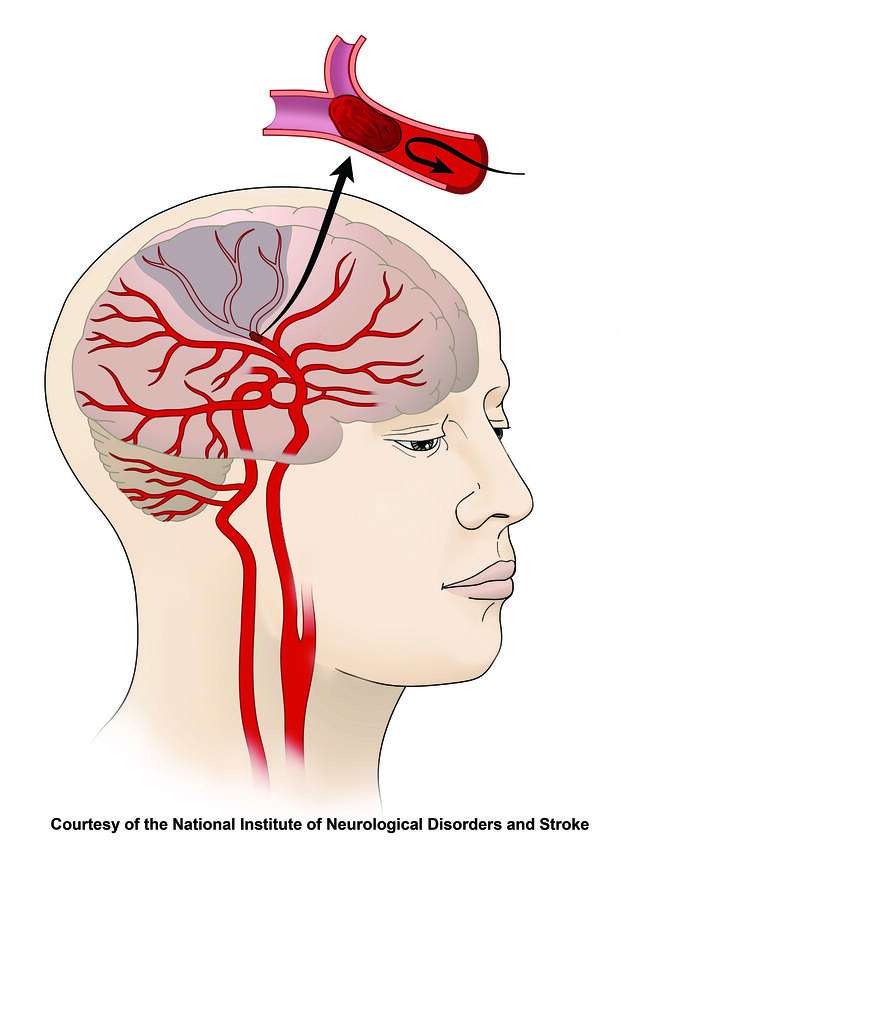
Answer: A stroke is a medical emergency that occurs when blood flow to parts of the brain is interrupted. Roughly 87% of strokes are ischemic strokes (depicted below, courtesy of the National Institute of Neurological Disorders and Stroke), meaning that a clot blocks blood flow in an artery to the brain where it is needed.

Question #2–What are the signs and symptoms of a stroke?
Answer: Most strokes involve facial drooping and arm weakness/numbness, especially on one side. Slurred speech is also common. Other symptoms may include sudden onset loss of balance/dizziness, changes in or loss of vision, difficulty speaking or understanding speech, and severe headache. Signs and symptoms depend on where the stroke occurs in the brain and can be different for each person, and for each stroke if a person suffers more than one.

Question #3–What is the best way to stop a stroke?
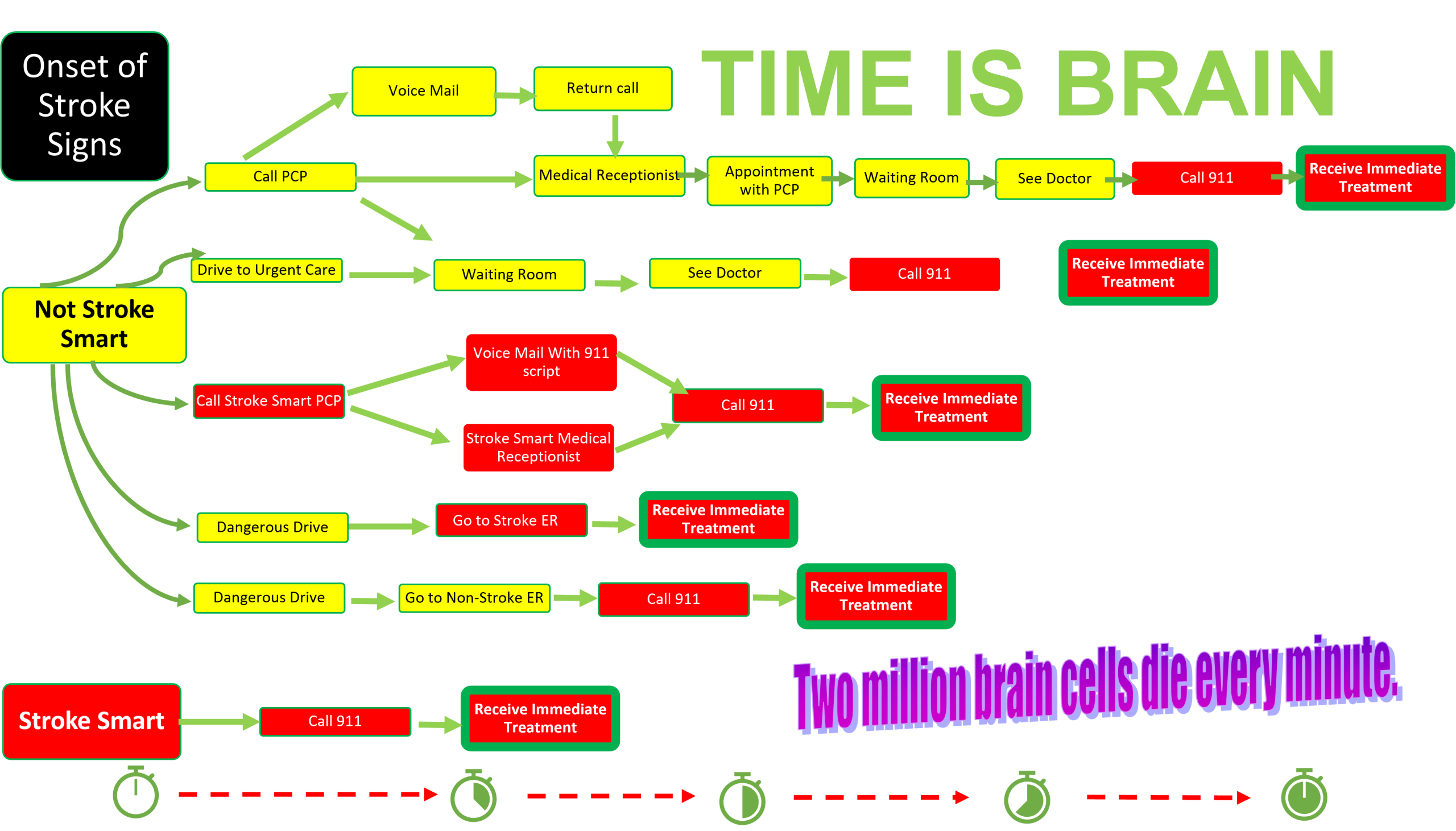
Answer: Call 9-1-1 immediately! Don’t drive yourself to the ER (your condition could worsen, causing you to crash and hurt yourself or someone else). Don’t call your primary care doctor (waiting for an appointment, even that same day, wastes precious time as treatment must be delivered within 3 hours of onset). Don’t have someone else drive you to the hospital (some emergency rooms are not equipped to deliver the necessary treatment).

Effective treatments are available when 911 is called immediately upon onset of symptoms.

Why it matters

Time is Brain

During a stroke, time lost is brain function lost. Strokes are the #1 cause of disability in the U.S. Two million brain cells die every minute during a stroke; precious time is lost when the patient calls their primary care doctor rather than 911. Precious time is lost if the patient is driven to a hospital that is not able to treat strokes. Stroke treatment requires a specific mediation and a specifically trained staff and is therefore not available at every emergency room.

When you spot a stroke, call 911. The ambulance staff are trained to take you to place best suited to treat your emergency.
Stroke Signs and Symptoms

Signs and symptoms of a stroke can come and go. They can be different for different people; further, a second stroke suffered after a first may have different signs and symtpoms. If you have these symptoms, DON’T wait thinking this will pass. The treatment window is short; call 911 immediately if you experience (CDC):

  • Sudden trouble walking, dizziness, loss of balance, or lack of coordination.
  • Sudden trouble seeing.
  • Sudden numbness or weakness in the face, arm, or leg, especially on one side of the body.
  • Sudden confusion, trouble speaking, or difficulty understanding speech.
  • Sudden severe headache with no known cause.

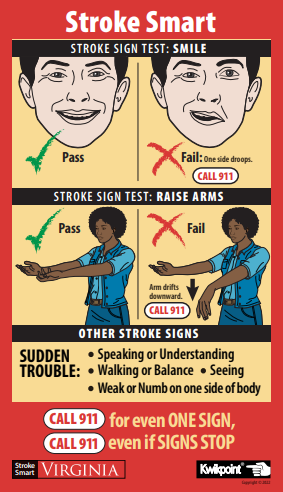
Classic stroke signs also include a droopy smile or an inability to raise one arm as shown below. This image on magnets and wallet cards is available free of charge for retention and easy recall through the Virginia Department of Health and a grant from the CDC; you may order by clicking on the image. Pass them out to your place of worship, rec center, and even doctor’s office. Spread the word and save a life!

A stroke can happen to anyone at any age. The American Heart Association created this documentary detailing the strokes and journey to full health of four teenage girls.